This story turns a decorating idea into a practical approach for real homes instead of simply presenting a look.
HALL PLAN: first name the problem correctly
In order to start this topic from the right place, it is necessary to first describe the usage problem, not the image. Determining the actual focus of use, such as a chat, window, bookshelf, art or fireplace, rather than the screen. Take photos and examine the area when it is most heavily used, not when it is empty. Write down which action is repeated, which item is temporarily abandoned, and where the current order is disrupted; It attributes the solution to need, not fashion.
The basic criterion in the living room approach is to combine sitting, talking, resting and passing movements in a single calm composition. Include in the starting note the surfaces that must remain unchanged, safety conditions and budget limit. This brief record connects all subsequent decisions to the same goal and reduces the number of items that are purchased because they look nice but have no equivalent at home.
Related guides: facing each other seating arrangement · Reading corner in the living room
First determine the boundary, then the product
Instead of choosing the product and fitting it to your home, first remove the safe use envelope. Showing the eye level of the occupants, speaking distance, window opening and the main passage line on the same plan. Then identify the main passage and the space that should remain untouched for service; The remaining space is the actual product boundary.
When recording the measurement, check the top and bottom of the wall, the slope of the ground, and the narrowest passage in the carriageway. A short proof with the template makes it easier to see the ratio. If you have to carry another item every time to open a lid, the solution is not functional even if it seems small.
“Living room layout without television: The professional result on what the room will look like depends on the size, safe application and maintenance as much as the appearance.”
Test the sample in real light and real contact
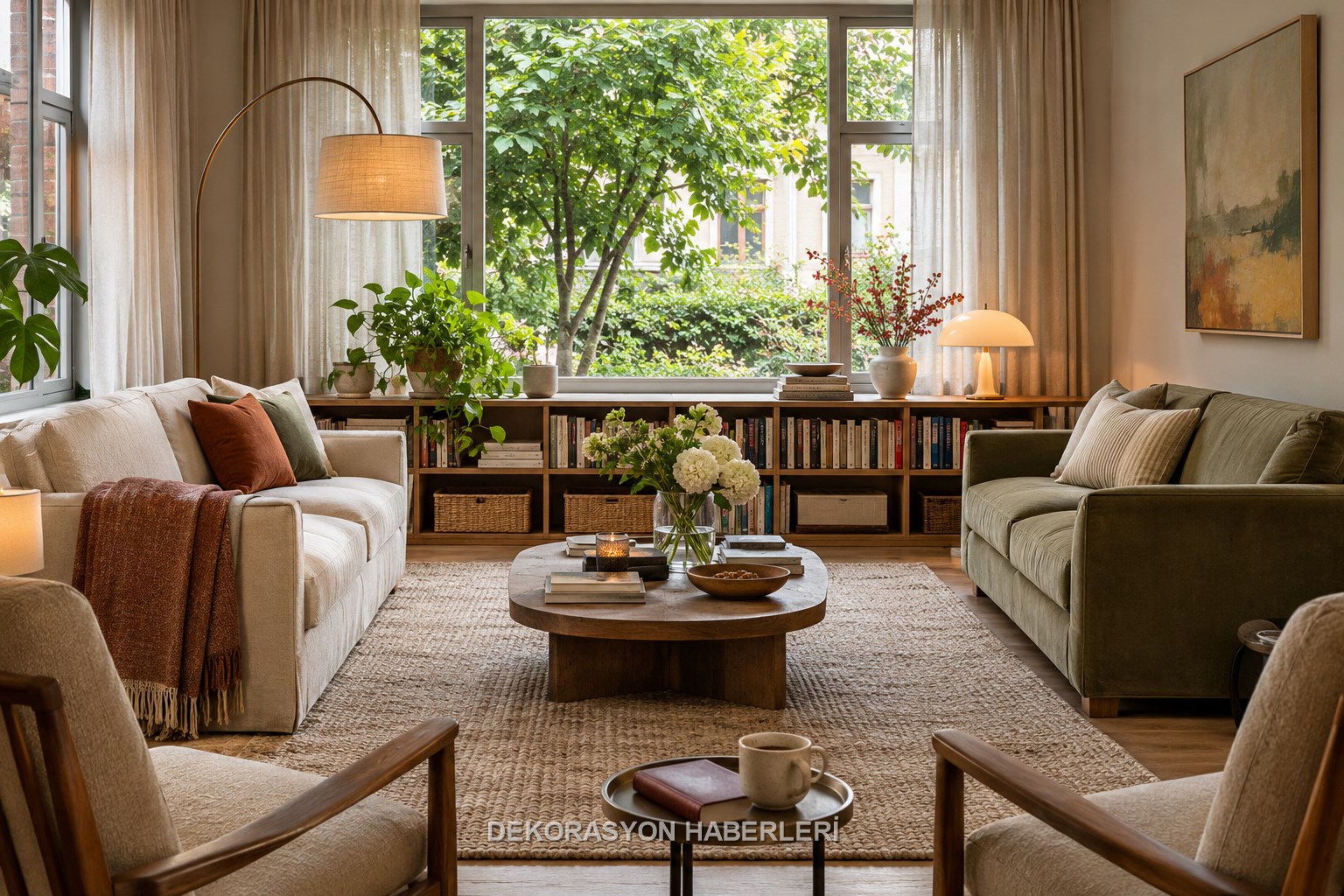
Featured materials for this project: facing seating, low bookcase, large rug, adjustable lamps and one strong art work. Instead of a color card, ask for a large sample with visible edges and seams. Touch feeling, brightness and traces remaining on the surface describe the daily character of the product better than the catalog photo.
Marking furniture footprints on the floor at full scale and trying different usage scenarios. View the sample in the morning and evening; If the manufacturer allows, do the stain and cleaning test on the invisible area. Using two main surfaces and a controlled emphasis, rather than multiple competing textures, strengthens unity.
Move job from dry proof to permanent step
Choosing the room's two most used activities, turning the chairs towards each other and supporting the secondary focus with light. Dry assemble the parts in place before cutting, drilling, gluing or fastening. If edge, clearance and pattern control is done at this stage, return is possible.
Light the work area and follow the manufacturer's individual preparation, application, drying and complete cure times. At points involving electricity, plumbing, waterproofing, load-bearing surface or heavy installation, leaving the job to a competent expert is more important than decorative preference.
Make light a control tool, not a separate decoration
View the sample by the window, in the middle of the room, and in the actual spot where it will be used. Brightness magnifies the reflection, dark tone magnifies weight, and raised texture magnifies the shadow. Since the phone screen can correct the color automatically, do not make the final decision based on the photo.
In the evening, do not settle for general light, but also try the task and low level layers. The light source should not shine directly into the eye and should show the work being done without shadowing it. The correct protection class is required for fixed fixtures and wet areas; Electrical connection is the job of a competent electrician.
Reduce expensive mistake, not cheap part
Suggestion for cost control: instead of buying a new set, rotate the existing sofa, try the plan with two light chairs and a portable lamp. Instead of searching for the lowest price, reduce the rework caused by wrong sizes, incompatible materials and poor installation. The technical document, reliable applicator and small test are therefore the real part of the budget.
Write down separate items that are needed now, can be added later, and can be dispensed with. Durability on frequently used surfaces; Prioritize flexibility in an infrequently used decorative piece. A repairable and locally serviceable product creates safer costs in the long run.
Determine stopping conditions before starting
The stop signal in this project is: remove the television and leave all the furniture facing a blank wall, or fill the room with only the decorative object. In addition, if unknown plumbing, moving surfaces, intense moisture or lack of secure fixing are observed, do not proceed with the application. Do not proceed to the decorative stage until the problem that requires an expert is solved.
Establishing a plan where the screen, window, radiator, door and main passages do not block each other when moving the application to the house in Turkey. Verify maintenance and service access, management permission, and actual use class of the product. Unlabeled material, mixed chemicals and improper connection should not be accepted for the sake of short-term appearance.
Plan the maintenance day as clearly as installation
After a month, rearranging the unused sofa, the dark corner and the coffee table left in the transition. Take note of first week usage; Check again after one month for stains, loosening, odor, water marks and movement problem. Early intervention to minor malfunctions is cheaper than renewing the entire system.
Test the cleaner on an inconspicuous spot and do not exceed the manufacturer's limit. Compare with the first photo during the change of seasons. Reducing the part that is not used, constantly moving or creating a maintenance burden ensures that the system operates for a long time.
HALL PLAN: decision summary before implementation
The short working order of this file is as follows: First, show the eye level of the occupants, speaking distance, window opening and the main transition line in the same plan; then choosing the room's two most used activities, rotating the chairs towards each other, and supporting the secondary focus with light. At the material stage, compare the options of facing seating, low bookcases, large rugs, adjustable lamps and single strong artwork in the same light and usage condition. If the measurement, proof and sample are not consistent with each other, do not proceed to the order or permanent application stage.
The main risk that requires you to rethink the decision is to remove the television and leave all the furniture facing a blank wall or fill the room with only decorative objects. To save the budget, instead of buying new sets, rotate the existing sofa, try the plan with two light chairs and a portable lamp; Rearranging the unused sofa, the dark corner and the coffee table left in the transition one month after the use begins. Thus, the title of living room layout without television: What will the room look like is no longer an idea based solely on appearance, but turns into a home solution that can be measured and whose maintenance is planned.
Determining the actual focus of use, such as a chat, window, bookshelf, art or fireplace, rather than the screen. We have collected measurement, material, application, safety and maintenance decisions in a single guide.
Decision table
Application checklist
- ✓HALL PLAN: first name the problem correctly
- ✓First determine the boundary, then the product
- ✓Test the sample in real light and real contact
- ✓Move job from dry proof to permanent step
- ✓Make light a control tool, not a separate decoration
Most common mistake
Suggestion for cost control: instead of buying a new set, rotate the existing sofa, try the plan with two light chairs and a portable lamp. Instead of searching for the lowest price, reduce the rework caused by wrong sizes, incompatible materials and poor installation. The technical document, reliable applicator and small test are therefore the real part of…
Care note
After a month, rearranging the unused sofa, the dark corner and the coffee table left in the transition. Take note of first week usage; Check again after one month for stains, loosening, odor, water marks and movement problem. Early intervention to minor malfunctions is cheaper than renewing the entire system. Test the cleaner on an inconspicuous spot and…
Frequently asked questions
What should be decided first for How to arrange a living room without a television?+
In order to start this topic from the right place, it is necessary to first describe the usage problem, not the image. Determining the actual focus of use, such as a chat, window, bookshelf, art or fireplace, rather than the screen. Take photos and examine the area when it is most heavily used, not when it is empty.…
What should be checked before measuring and installation?+
Instead of choosing the product and fitting it to your home, first remove the safe use envelope. Showing the eye level of the occupants, speaking distance, window opening and the main passage line on the same plan. Then identify the main passage and the space that should remain untouched for service; The remaining…
Which criteria matter when choosing materials?+
Featured materials for this project: facing seating, low bookcase, large rug, adjustable lamps and one strong art work. Instead of a color card, ask for a large sample with visible edges and seams. Touch feeling, brightness and traces remaining on the surface describe the daily character of the product better than the…
How should the maintenance plan be organised?+
After a month, rearranging the unused sofa, the dark corner and the coffee table left in the transition. Take note of first week usage; Check again after one month for stains, loosening, odor, water marks and movement problem. Early intervention to minor malfunctions is cheaper than renewing the entire system. Test…