This story turns a decorating idea into a practical approach for real homes instead of simply presenting a look.
Write the task and actual load of the rack
List what you will put on the shelf before assembly. The sum of three novels, a flower pot and a decorative object may be heavier than expected; Kitchen jars or a record collection create a constant load. The carrying values of the shelf table, console and fasteners should be evaluated together.
Take into account not only today's items, but also that the shelf will fill up over time. Read the capacity specified by the manufacturer as the value under suitable wall and correct installation conditions, not as an upper limit. Also consider the risk of climbing and pulling in areas accessible to children.
Determine wall type by evidence, not by eye
Concrete, solid brick, perforated brick, aerated concrete and plasterboard do not work safely with the same dowel. Looking behind the outlet cover, examining a previously drilled hole, or verifying construction information can provide a start; If you are still not sure, get support from a competent master.
It is often an advantage to coincide with the carrier profile in plasterboard; but the location and thickness of the profile must be verified. If the edge of the hole drilled in the hollow wall is falling apart, randomly installing larger screws is not a solution. Use the wall-specific, certified mounting system in accordance with the manufacturer's instructions.
“The secret to a sturdy shelf isn't the big screw; is to solve the wall, load and fastener in the same equation.”
Scan cable and pipeline before drilling
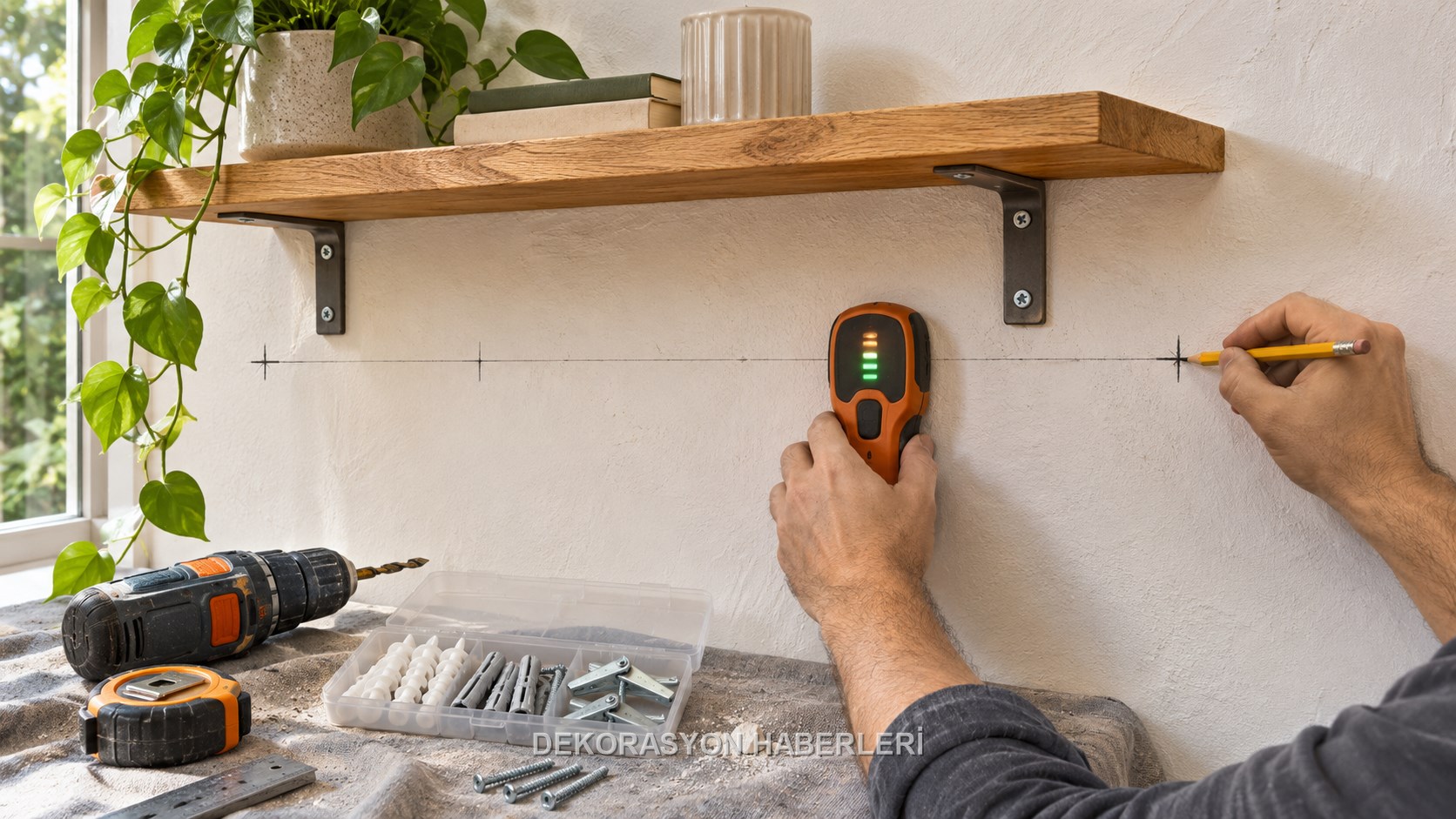
Assume that electrical lines can be found in the horizontal-vertical direction of the sockets and switches. Plumbing can take unexpected routes through bathroom and kitchen walls. Check the area from different directions with a suitable scanning device; Do not ignore the limitations of the device and the user manual.
If the scan result is unclear, it is cheaper to relocate the hole or call a specialist than to repair walls and plumbing later. If work is required on a power line, shutting off power alone does not provide sufficient expertise; Leave fixed installation intervention to a competent electrician.
Measure the shelf top, bracket and opening together
A long table that looks thin may deflect at the midpoint. The thickness of the shelf, its material, the distance between consoles and the distribution of the load should be determined together. Stacking heavy objects at the ends increases the leverage effect in the connections; It is safer to place the load close to the consoles and balanced.
The console depth must adequately support the shelf table, but it must not be visible from the front and restrict the usage area. Rehearse door opening, head height, curtain movement and working distance on the table with a cardboard template. While the shelf looks beautiful, it should not interfere with the daily pass.
Do not disturb the order of marking and drilling
First, mark the finished shelf top line with a laser or spirit level. Auxiliary tape can be used to prevent the part from slipping while transferring the console holes with a pencil. Drilling the first hole and loosely attaching the bracket makes it easier to recheck the remaining points on the actual part.
The diameter of the drill bit and the hole depth must comply with the dowel instructions. Exaggerating the hole will weaken the hold of the dowel; Excessive stress on the surface may cause cracks in the ceramic. Remove dust with appropriate method and do not neglect personal protective equipment.
Choose dowel and screw as one system
Screw diameter, length and head shape must fit both the dowel and the console hole. Even if the short screw passes through the surface coating, it may not reach the carrier body sufficiently. Excessively long screws increase the risk of hidden installations. Read the wall type and mounting dimensions on the package.
Tighten the screws alternately and evenly; Do not push one point to the end and leave the others blank. The console should not move when placed on the wall, but the wall surface should not be crushed as a result of excessive tightening. Do not reuse a damaged dowel or a hole with a distorted diameter.
Make load testing gradual and controlled
Do not put all the books on the shelf as soon as the assembly is completed. First check the play and sound with light hand pressure, then increase the load in small groups. If you see cracks around the console, movement of the screw head, or significant bending in the rack top, remove the load and re-evaluate the connection.
If you are going to use a pot, add a substrate against water leakage and calculate the weight with wet soil. Do not place valuables or breakable items until the test is completed. If there is a bed, desk chair or children's play area under the shelf, increase the safety margin.
Maintenance and final inspection extend the life of the shelf
Observe the connections in the first weeks; If there is loosening, do not tighten the screw again without solving the cause. Moisture, vibration and constantly changing load can affect the connection. Apply proper care to the wooden table, do not let water sit on the surface and do not forget the carrying capacity of the shelf for later.
Do not automatically use the dowel of the removed shelf on the new wall when moving. Redefine the wall type and replace damaged parts. Safe assembly; It is the combination of correct diagnosis, certified fasteners and moderate use.
Determine the wall type, connection, clearance and actual usage load before making the rack look good.
Decision table
Application checklist
- ✓Write the task and actual load of the rack
- ✓Determine wall type by evidence, not by eye
- ✓Scan cable and pipeline before drilling
- ✓Measure the shelf top, bracket and opening together
- ✓Do not disturb the order of marking and drilling
Most common mistake
Do not put all the books on the shelf as soon as the assembly is completed. First check the play and sound with light hand pressure, then increase the load in small groups. If you see cracks around the console, movement of the screw head, or significant bending in the rack top, remove the load and re-evaluate the connection. If you are going to use a pot,…
Care note
Observe the connections in the first weeks; If there is loosening, do not tighten the screw again without solving the cause. Moisture, vibration and constantly changing load can affect the connection. Apply proper care to the wooden table, do not let water sit on the surface and do not forget the carrying capacity of the shelf for later. Do not…
Frequently asked questions
What should be decided first for Load planning before mounting a wall shelf?+
List what you will put on the shelf before assembly. The sum of three novels, a flower pot and a decorative object may be heavier than expected; Kitchen jars or a record collection create a constant load. The carrying values of the shelf table, console and fasteners should be evaluated together. Take into account…
What should be checked before measuring and installation?+
Concrete, solid brick, perforated brick, aerated concrete and plasterboard do not work safely with the same dowel. Looking behind the outlet cover, examining a previously drilled hole, or verifying construction information can provide a start; If you are still not sure, get support from a competent master. It is often…
Which criteria matter when choosing materials?+
Assume that electrical lines can be found in the horizontal-vertical direction of the sockets and switches. Plumbing can take unexpected routes through bathroom and kitchen walls. Check the area from different directions with a suitable scanning device; Do not ignore the limitations of the device and the user manual.…
How should the maintenance plan be organised?+
Observe the connections in the first weeks; If there is loosening, do not tighten the screw again without solving the cause. Moisture, vibration and constantly changing load can affect the connection. Apply proper care to the wooden table, do not let water sit on the surface and do not forget the carrying capacity of…