This story turns a decorating idea into a practical approach for real homes instead of simply presenting a look.
Use facade direction as initial information
Compass direction gives a clue about the sun, but the opposite building, upper balcony, tree and season change the actual light. Don't make the phone compass your only decision tool. On a clear day, record areas that receive direct sunlight in the morning, noon and evening with photographs or simple drawings.
Repeat the same observation in different seasons; The height and duration of the sun vary. The corner that is bright in winter can be burning in summer. Plan the placement of plants, seating and textiles to withstand the balcony's harshest condition throughout the year, not for a single day's impression.
Observe the wind along with building geometry
High floor, building corner and opposite blocks can accelerate or rotate the wind. Watch for a few days the movement of curtains and light items and the direction in which the leaves blow when the balcony door is opened. The city data in the weather app alone does not tell about local turbulence inside the balcony.
Tall, top-heavy pots in windy areas are more prone to topple over. Containers with low and wide bases, grouping close to a protected wall and secure fixing in accordance with the manufacturer can reduce the risk. Do not place loose accessories or flower pots outside the railing.
“Balcony layout starts before the plant list; The same square meter is four different spaces in the morning, noon, wind and rain.”
Solve shading with façade security
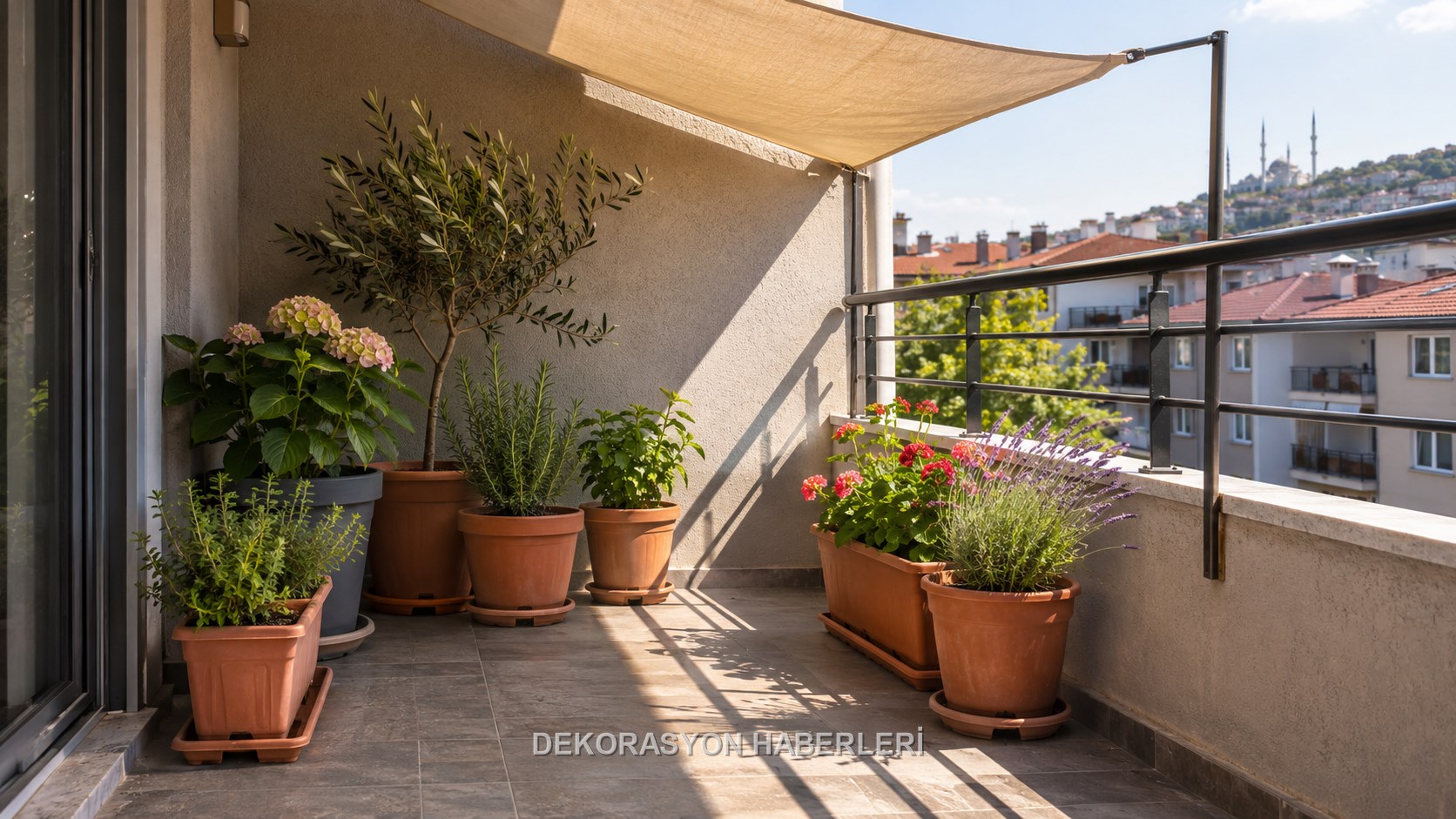
Umbrellas require a large base in a small area and can be dangerous in sudden winds. An awning or fixed canopy interferes with the building facade; Management permit, mounting surface and wind resistance require professional evaluation. It is not safe to tie the fabric shade to the railing with random strings.
A curtain used inside the rental house, a removable and manufacturer-approved shade shade, or a plant group that changes its position can provide lower intervention. In every solution, the door, escape, water from the upper neighbor and cleaning access must remain open.
Choose plants based on microclimate, not labels
A single statement like “sun lover” is not enough; The number of hours and intensity of sun exposure, wind and the drying speed of the pot together determine the result. Check with your local nursery about the balcony orientation, floor and times you observe. Also verify species selection with child and pet safety.
Gradual acclimatization may be required under suitable conditions rather than putting the new plant in the hardest spot all at once. If leaf burn, persistent wilting or falling over is observed, do not force the plant for the sake of decorative goals. A more durable species, a more sheltered location or fewer plants creates a healthier layout.
Consider the total weight of the pot, soil and water
A large pot may appear light when dry and much heavier with soil and water when watered. Stacking many containers in one corner concentrates the load. If there is any doubt about the balcony's carrying capacity, do not install heavy layouts without building documents and competent expert opinion.
The potting mat controls water, but can create root and mosquito problems if left full for long periods of time. Do not block the drainage hole; Prevent overflowing water from flowing to the neighbor below or to the façade. Adjust watering times according to evaporation, wind and local water constraints.
Choose furniture and textiles according to the harshest condition
In intense sun, dark metal can get very hot, fabric color can fade, and some plastics can become brittle over time. Check the product's outdoor use conditions, UV and corrosion information. Salty air near the sea can make maintenance of metal equipment more critical.
Plan storage to take cushions and covers that blow away in the wind inside after each use. Check the tipping or sliding behavior of furniture that you consider safe because it is heavy. If permanent fixing to the floor is required, competent application is essential for waterproofing and building safety.
Create a four-season maintenance calendar
Check connections and drainage in spring, irrigation and shade in summer, wind and leaf accumulation in autumn, and frost and storage in winter. Regularly cleaning the pot plate, drain and railing combinations will prevent the small problem from getting bigger.
Photograph the balcony plan twice a year to see if the plants are growing and if the passage is narrowing. Safe, sustainable outdoor space is not decor that is completed once and forgotten; It is a living system that is regularly adjusted by the sun, water and wind.
Related guides: small balcony layout
Lift temporary order on severe weather warning
If strong wind, hail or heavy rain is expected, move light furniture, canopies, potting plates and textiles to a safe indoor area in advance. Going to the balcony at the last minute can be risky; Watch weather warnings and set a simple collection order.
Also check the connection of seemingly fixed parts after the storm. A cracked pot, loosened apparatus or displaced coating should not be used immediately. The safe balcony plan takes into account not only the normal day, but also the expected harsh weather conditions of the region.
A four-season plan that combines directional information with observation and transforms shadow, wind, water and pot weight into a safe balcony layout.
Decision table
Application checklist
- ✓Use facade direction as initial information
- ✓Observe the wind along with building geometry
- ✓Solve shading with façade security
- ✓Choose plants based on microclimate, not labels
- ✓Consider the total weight of the pot, soil and water
Most common mistake
Check connections and drainage in spring, irrigation and shade in summer, wind and leaf accumulation in autumn, and frost and storage in winter. Regularly cleaning the pot plate, drain and railing combinations will prevent the small problem from getting bigger. Photograph the balcony plan twice a year to see if the plants are growing and if the passage is…
Care note
Check connections and drainage in spring, irrigation and shade in summer, wind and leaf accumulation in autumn, and frost and storage in winter. Regularly cleaning the pot plate, drain and railing combinations will prevent the small problem from getting bigger. Photograph the balcony plan twice a year to see if the plants are growing and if the passage is…
Frequently asked questions
What should be decided first for Balcony sun and wind: read the conditions before choosing plants?+
Compass direction gives a clue about the sun, but the opposite building, upper balcony, tree and season change the actual light. Don't make the phone compass your only decision tool. On a clear day, record areas that receive direct sunlight in the morning, noon and evening with photographs or simple drawings. Repeat…
What should be checked before measuring and installation?+
High floor, building corner and opposite blocks can accelerate or rotate the wind. Watch for a few days the movement of curtains and light items and the direction in which the leaves blow when the balcony door is opened. The city data in the weather app alone does not tell about local turbulence inside the balcony.…
Which criteria matter when choosing materials?+
Umbrellas require a large base in a small area and can be dangerous in sudden winds. An awning or fixed canopy interferes with the building facade; Management permit, mounting surface and wind resistance require professional evaluation. It is not safe to tie the fabric shade to the railing with random strings. A…
How should the maintenance plan be organised?+
Check connections and drainage in spring, irrigation and shade in summer, wind and leaf accumulation in autumn, and frost and storage in winter. Regularly cleaning the pot plate, drain and railing combinations will prevent the small problem from getting bigger. Photograph the balcony plan twice a year to see if the…