This story turns a decorating idea into a practical approach for real homes instead of simply presenting a look.
First document the intervention boundary and existing ground
Contract and landlord approval should be checked before using adhesives, drilling or permanent paint on a rental home. Record existing ceramics, cracks, slope, and drain perimeter with dated photograph. Coating will not solve water leaks or loose tile; It should only be used on solid ground.
If there is persistent water accumulation, swelling or traces of moisture to the subfloor, do not cover it with decorative coating. Examine the cause with building management and a competent expert. The purpose of the removable product is not to hide the defect, but to reversibly improve comfort and appearance.
Measure slopes, drains and door thresholds to the millimeter
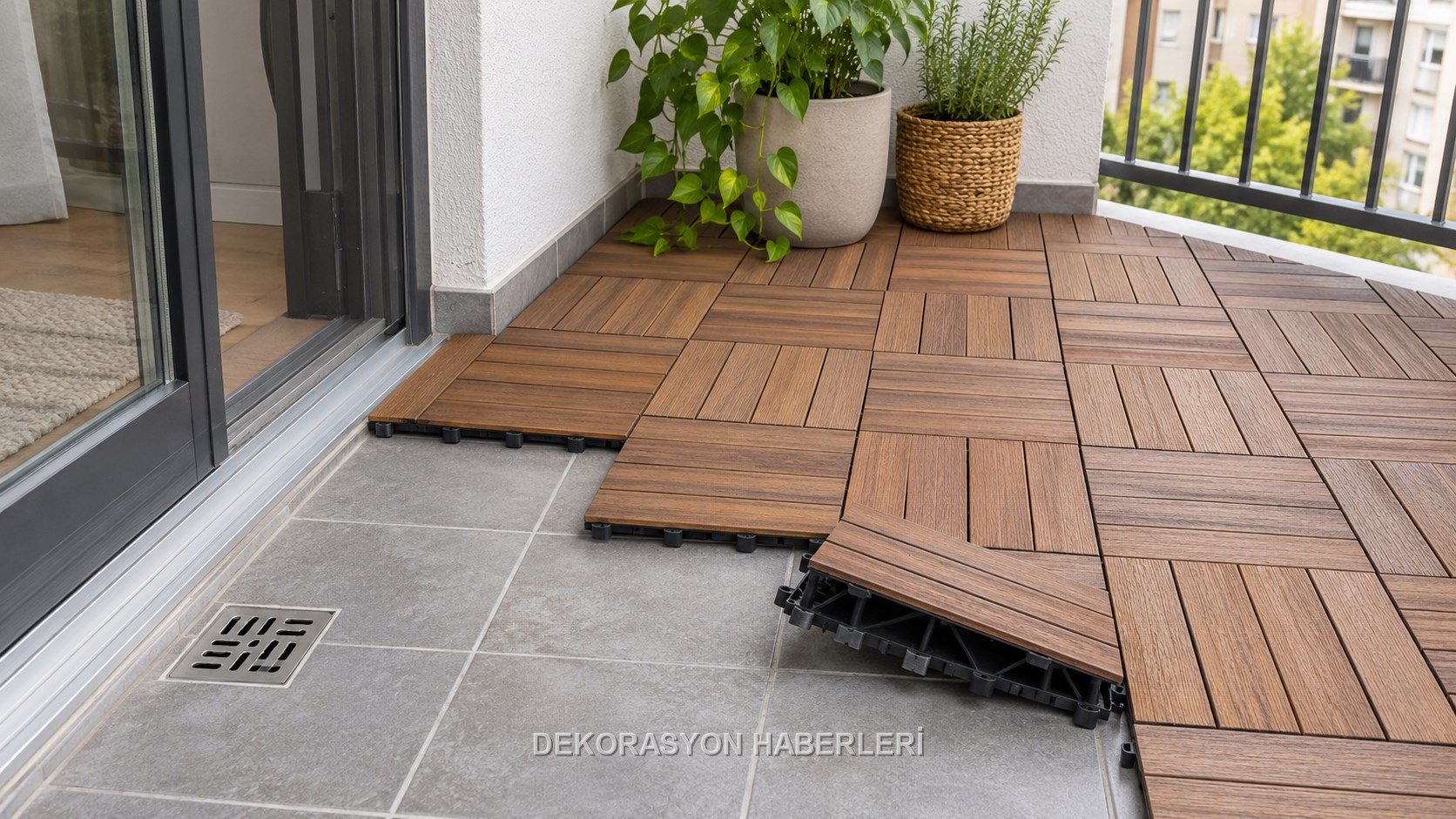
The balcony floor is sloped to carry water to the drain. Interlocking tile with six channels can allow water to flow, but if the piers cover the drain or accumulate leaves, the risk of overflow increases. Leave an accessible service area around the drain that is easily removed.
If the new surface exceeds the door threshold, rainwater may be directed in or the door may not open. Measure the total product height including the attachment base and stand, if applicable. The railing bottom gap and drainage opening should also not be affected by the covering height.
“The removable floor is successful to the extent that it allows water to drain and the house to return to its former state without hiding the problem underneath.”
Test material and thermal behavior in interlocking tile
The sun, water and temperature behavior of wood, wood-composite or plastic-looking interlocking tiles is different. Leave the small sample on the balcony for a few days and observe the surface temperature, shifting after rain and color change with bare feet. Check the product's outdoor use certificate.
If it is necessary to cut tile edges, clean finish and removability should be planned. The cut sharp edge should not remain in the transition, and the connection nails should not be forced. Leave the expansion allowance recommended by the manufacturer; The surface pressed against the wall may swell with temperature changes.
Consider outdoor carpeting with water and wind
Carpet quickly adds color and texture, but can trap moisture and dirt underneath. Choose a product that does not block drainage, dries quickly, and is clearly marked for outdoor use. It may be necessary to remove and dry the subfloor after rain; Carpet that is constantly wet can create odors and surface stains.
Lightweight carpet can lift in the wind; It should not create a risk of tripping or falling down. Before using adhesive tape, verify whether it leaves marks on the ground and whether it is suitable for outdoor use. Even temporary fixing should not cover the drain or waterproofing joint.
Test gliding, chair balance and cleaning together
Perform a careful slip test with flat-soled shoes on the wet sample; Also check the technical slip data of the product. Interlocking tile gaps can catch a thin chair leg, while soft carpet can unbalance a table. Try the actual furniture you will use on the sample.
See how the brush, broom and water reach the subsurface. If it is not easy to remove the coating piece by piece, regular cleaning is postponed. Concentrating heavy pots on the same tile can strain bottom connections; distribute the load and control the potting water.
Solve the disassembly and storage scenario without purchasing
How to separate, clean and move hundreds of tiles when moving is as important as the product. If the connection tabs break in a single disassembly, the system is not truly reusable. Ask the supplier for spare parts and edge profile availability.
If you are going to put it away in winter, plan the volume where the parts will be stored dry, flat and safe. Do not place damp tiles in a closed box. Since color differences or dirt lines may remain on the floor after dismantling, perform regular intermediate cleaning and restore the existing surface with an appropriate method before delivery.
Recheck the system after the first rain
During the first heavy rain after installation, observe that water flows freely under the surface, the drain remains accessible, and there is no accumulation on the door sill. If parts float, move, or smell bad, remove the system and resolve the cause.
Remove a few tiles monthly and check the subfloor, joints and water marks. The reversible balcony floor is not a maintenance-free cover; It is a temporary use layer that keeps the structure underneath visible and accessible.
Related guides: read balcony conditions
Add cutting and service allowance to the material account
As well as the gross area of the balcony, the cuts around columns, corners and drains also affect the product quantity. Draw the layout on paper with the module measurement; reduce unnecessary waste and very small edge pieces. A few spare tiles may make it easier to replace the broken piece in the same shade in the future.
Do not pile excess product haphazardly on the damp balcony; Store dry and flat, labeled. Ask about the returnable sealed package policy before purchasing. Add edge profile, cutting tool, transportation and post-disassembly cleaning needs to the total cost.
Interlocking tiles, outdoor carpets and similar solutions; Guide comparing expense, threshold, slippage, temperature, weight and trace after dismantling.
Decision table
Application checklist
- ✓First document the intervention boundary and existing ground
- ✓Measure slopes, drains and door thresholds to the millimeter
- ✓Test material and thermal behavior in interlocking tile
- ✓Consider outdoor carpeting with water and wind
- ✓Test gliding, chair balance and cleaning together
Most common mistake
During the first heavy rain after installation, observe that water flows freely under the surface, the drain remains accessible, and there is no accumulation on the door sill. If parts float, move, or smell bad, remove the system and resolve the cause. Remove a few tiles monthly and check the subfloor, joints and water marks. The reversible balcony floor is…
Care note
As well as the gross area of the balcony, the cuts around columns, corners and drains also affect the product quantity. Draw the layout on paper with the module measurement; reduce unnecessary waste and very small edge pieces. A few spare tiles may make it easier to replace the broken piece in the same shade in the future. Do not pile excess product…
Frequently asked questions
What should be decided first for Rental balcony flooring: choosing a removable surface?+
Contract and landlord approval should be checked before using adhesives, drilling or permanent paint on a rental home. Record existing ceramics, cracks, slope, and drain perimeter with dated photograph. Coating will not solve water leaks or loose tile; It should only be used on solid ground. If there is persistent…
What should be checked before measuring and installation?+
The balcony floor is sloped to carry water to the drain. Interlocking tile with six channels can allow water to flow, but if the piers cover the drain or accumulate leaves, the risk of overflow increases. Leave an accessible service area around the drain that is easily removed. If the new surface exceeds the door…
Which criteria matter when choosing materials?+
The sun, water and temperature behavior of wood, wood-composite or plastic-looking interlocking tiles is different. Leave the small sample on the balcony for a few days and observe the surface temperature, shifting after rain and color change with bare feet. Check the product's outdoor use certificate. If it is…
How should the maintenance plan be organised?+
As well as the gross area of the balcony, the cuts around columns, corners and drains also affect the product quantity. Draw the layout on paper with the module measurement; reduce unnecessary waste and very small edge pieces. A few spare tiles may make it easier to replace the broken piece in the same shade in the…