This story turns a decorating idea into a practical approach for real homes instead of simply presenting a look.
Map different conditions of the same wall
Water splashes predominate behind the sink, grease and heat around the stove, and constant wiping in the preparation area. Treat the space between the countertops not as a single color strip, but as a work surface where different loads come together. Windows, hoods, under cabinets and sockets divide this surface into small pieces.
Measure the flatness of the wall, the existing finish, and the clear height between the counter and the upper cabinet. The curved surface does not always hide the large plate; Application thickness may conflict with cabinet and socket casings. Before selecting the material, the preparation of the sub-surface and the technical requirements of the areas exposed to water and heat should be determined.
Select the ceramic by number of joints and module
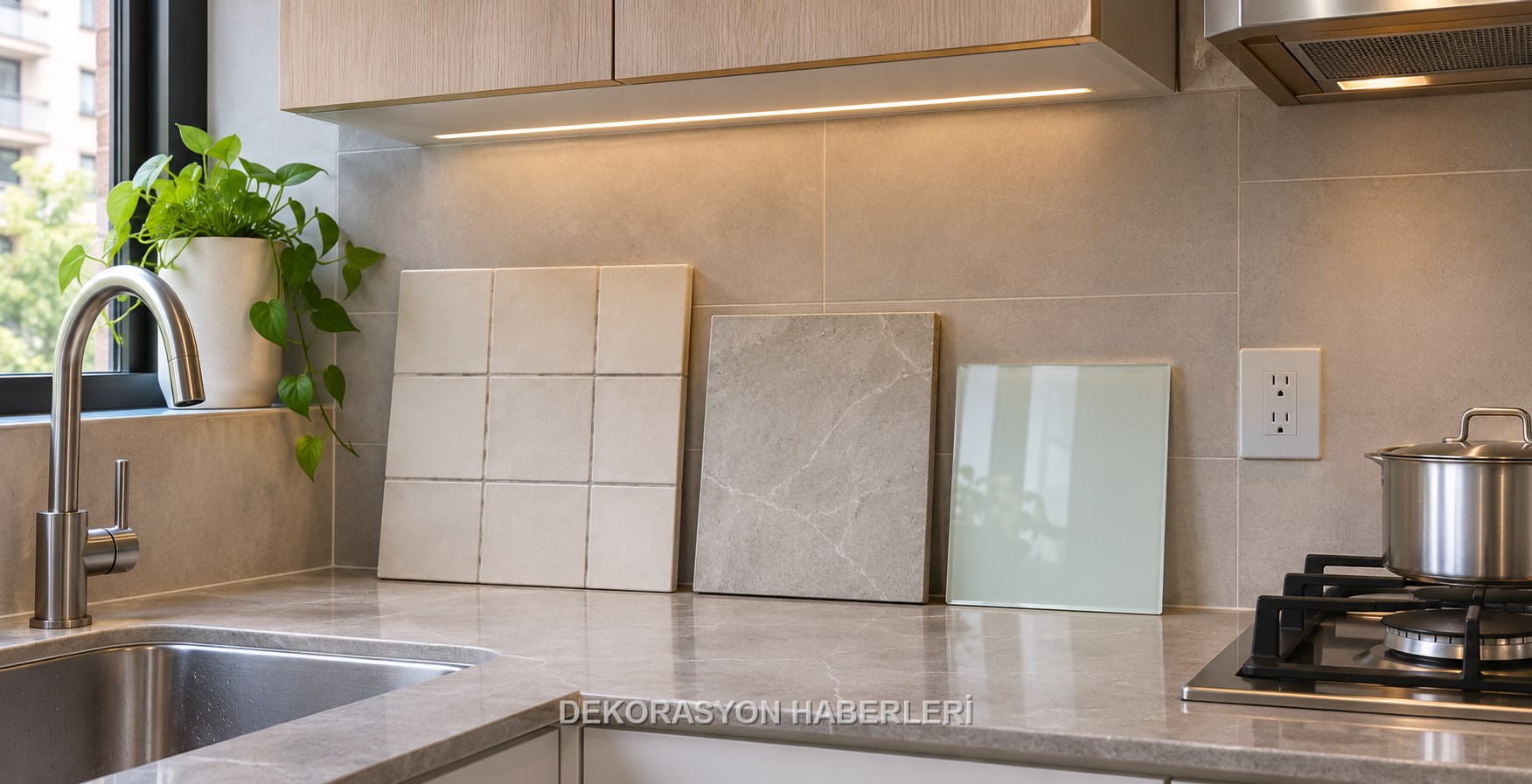
Small ceramic produces more joints, larger module produces fewer joints; However, a large size that is incompatible with the wall size may leave narrow and uneven cuts on the edges. Before application, center the module on the wall and draw where the sockets and corner cuts will be. The smoothness of the first line seen determines the overall quality.
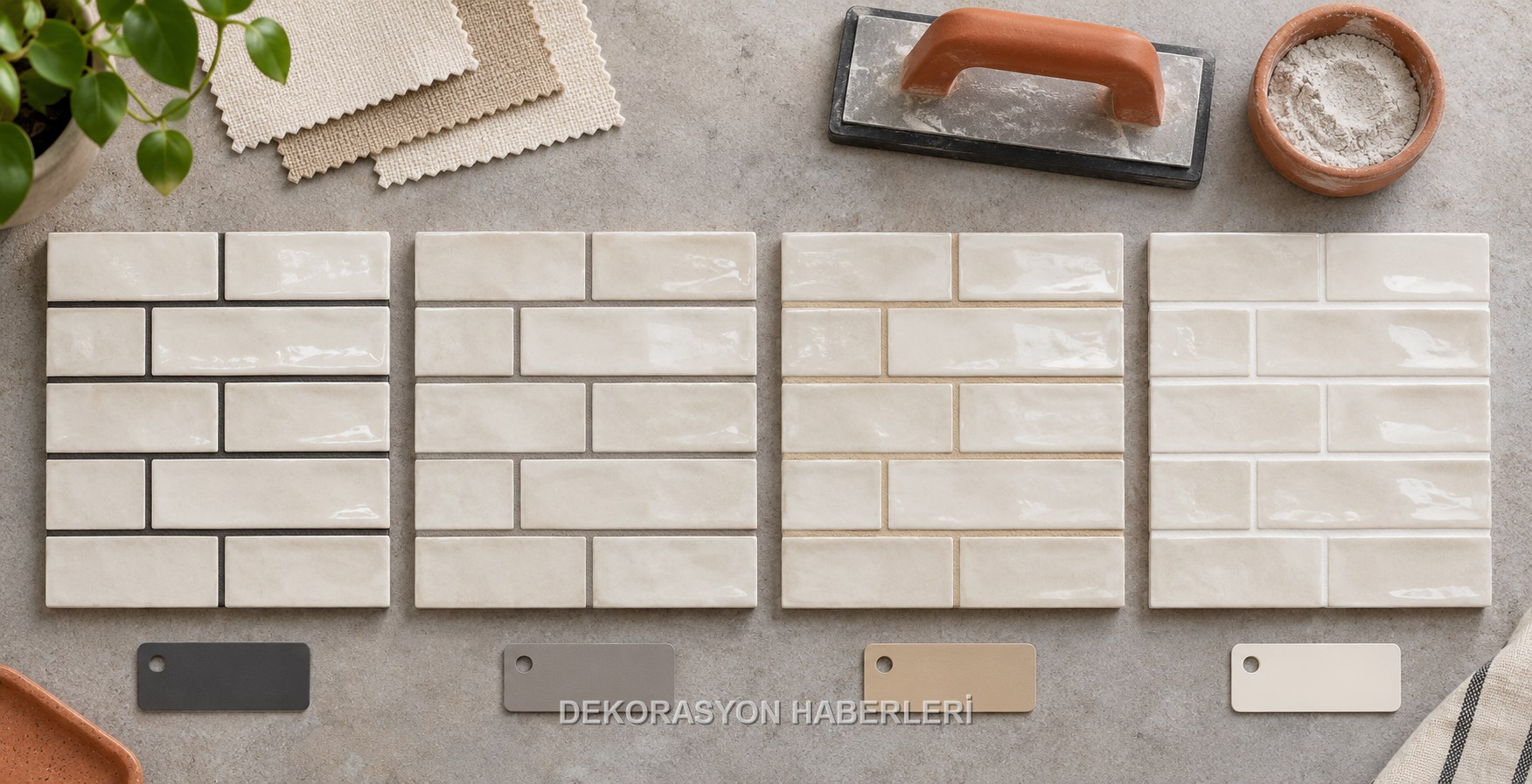
Instead of just matching the grout color to the ceramic, consider it together with maintenance and stain visibility. Joints that are too open may fatigue more quickly around the stove; Excessive contrast highlights every tiny misalignment. Follow the manufacturer's instructions for joint product, width and sealing requirement.
Related guides: grout color guide
“It is not only the main material that makes the countertop long-lasting; It is the solution to the combinations where water and dirt encounter.”
While the joint space decreases in the large plate, application precision increases
Porcelain or sintered large plate provides a smooth surface with few joints. On the other hand, handling, cutting and socket cavities require specialist equipment; The cost of breakage and wastage increases. If the same appearance as the countertop material is desired, thickness and edge rotation should be drawn as well as color.
Do not cover the access hatch, gas connection or removable technical area for the sake of a uniform appearance. Follow the appliance manufacturer's specifications for the distance between the stove and the wall. The heat resistance of the material alone is not sufficient; The adhesive, joint and substrate must also comply with the same condition.
Check color, edge and reflection on the glass surface
Back-painted glass can be an easy-to-wipe, low-joint option; However, it does not forgive measurement errors around sockets and corners. Verify tempered or application-appropriate product requirement with qualified supplier. Since the cutting and hole locations are finalized before production, subsequent changes are limited.
Shiny glass can reflect the opposite wall and counter clutter. See the sample in real kitchen light; The back paint color may be perceived differently from the color chart due to the tone of the glass. The safe finish of the edges, the color of the silicone and the shadow line under the cabinet must be clearly defined in the proposal.
Solve the socket, corner and counter combination from scratch
Even the most expensive material looks weak if the outlet area is cut crookedly, the corner is covered with a random profile, or the countertop joint leaves a gap that traps dirt. Confirm all finishes on the drawing or marked photo before the master begins. The color and thickness of the profile must be compatible with the main surface.
The sealant used on the countertop-wall line must be compatible with the materials and suitable for kitchen use. The overly thick silicone strip does not hide the bad subsurface. Observe the curing time after application; Using the sink and counter too early may reduce the performance of the combination.
Test the sample on a small scale with real dirt
Test a small spot of water, oil, and frequently used food on the sample; Clean using the method recommended by the manufacturer. See if you get results without using abrasive products or hard sponges. The texture and embossing can hold the cloth fiber in daily wiping while looking beautiful in the light.
Test the cleaner on an inconspicuous spot before applying it directly to the entire wall. Acidic products may leave permanent marks on natural stone or sensitive surfaces. Keep the material's maintenance sheet; It is useful to note the basic instructions in the cabinet so that the person who comes home later does not use the wrong product.
Do not compare the offer with the price per square meter alone
See material, wastage, sub-surface preparation, dismantling, transportation, profile, joint, silicone, socket works and cleaning items separately. If the seemingly cheap product requires a lot of cutting and high wastage, the total cost changes. Ask about the applicator's experience with similar materials and the warranty term of the work.
Sample code, batch or tone information, placement direction and edge finish must be written before ordering. At the final check, turn on the light and examine the surface from a side angle; Check alignment, gaps, socket covers and sealing line. A good counter space not only facilitates maintenance but also solves all these details calmly.
Ceramics, large plates and glass are distinguished not only by their colors; Application guide comparing joints, heat, setting, edge finish and daily wiping load.
Decision table
Application checklist
- ✓Map different conditions of the same wall
- ✓Select the ceramic by number of joints and module
- ✓While the joint space decreases in the large plate, application precision increases
- ✓Check color, edge and reflection on the glass surface
- ✓Solve the socket, corner and counter combination from scratch
Most common mistake
Test a small spot of water, oil, and frequently used food on the sample; Clean using the method recommended by the manufacturer. See if you get results without using abrasive products or hard sponges. The texture and embossing can hold the cloth fiber in daily wiping while looking beautiful in the light. Test the cleaner on an inconspicuous spot before…
Care note
See material, wastage, sub-surface preparation, dismantling, transportation, profile, joint, silicone, socket works and cleaning items separately. If the seemingly cheap product requires a lot of cutting and high wastage, the total cost changes. Ask about the applicator's experience with similar materials and the warranty term of the work. Sample code,…
Frequently asked questions
What should be decided first for Choosing a backsplash: cleaning and joints before appearance?+
Water splashes predominate behind the sink, grease and heat around the stove, and constant wiping in the preparation area. Treat the space between the countertops not as a single color strip, but as a work surface where different loads come together. Windows, hoods, under cabinets and sockets divide this surface into…
What should be checked before measuring and installation?+
Small ceramic produces more joints, larger module produces fewer joints; However, a large size that is incompatible with the wall size may leave narrow and uneven cuts on the edges. Before application, center the module on the wall and draw where the sockets and corner cuts will be. The smoothness of the first line…
Which criteria matter when choosing materials?+
Porcelain or sintered large plate provides a smooth surface with few joints. On the other hand, handling, cutting and socket cavities require specialist equipment; The cost of breakage and wastage increases. If the same appearance as the countertop material is desired, thickness and edge rotation should be drawn as…
How should the maintenance plan be organised?+
See material, wastage, sub-surface preparation, dismantling, transportation, profile, joint, silicone, socket works and cleaning items separately. If the seemingly cheap product requires a lot of cutting and high wastage, the total cost changes. Ask about the applicator's experience with similar materials and the…