This story turns a decorating idea into a practical approach for real homes instead of simply presenting a look.
WIND PLAN: a brief diagnosis before shopping
Establishing a balanced balcony without putting light items at risk of flying and without straining the floor and evacuation with heavy furniture. Before looking for a solution, document the current situation with a sketch, four photos and three daily usage notes. Determining whether the problem arises from measurement, wrong material, incomplete maintenance or placement prevents wrong intervention.
In this file, the perspective is to make sun, wind, rain, drainage and building load the initial data of the design. Mark the elements to be protected, the parts that can be changed and the work that requires specialists from the beginning. A clear diagnosis simplifies the design language; It also ensures that the budget goes to the main problem that determines the result, not to the decorative detail.
Related guides: Sun and wind plan on the balcony · Balcony lighting and security
Calculate centimeters with usage margin
The measurement to be applied under this heading is as follows: observing the prevailing wind direction, turbulence behind the door, railing height and overturning marks of the goods. Take the same value from three points if possible; In old buildings, walls and floors may not be exactly parallel. Do not forget to deduct fixed installations, baseboards, sockets and protrusions from the main measurement.
The cardboard model or existing object shows the physical equivalent of the measurement. Experiment with the space required to bend, reach, turn, and move a piece. Choosing the size that does the job without disturbing the movement, rather than the product that fits the biggest, makes the space look more professional and spacious.
“The professional result when it comes to choosing furniture and textiles for a windy balcony depends on size, safe application and care as much as appearance.”
Choose the way the material ages, not its first day
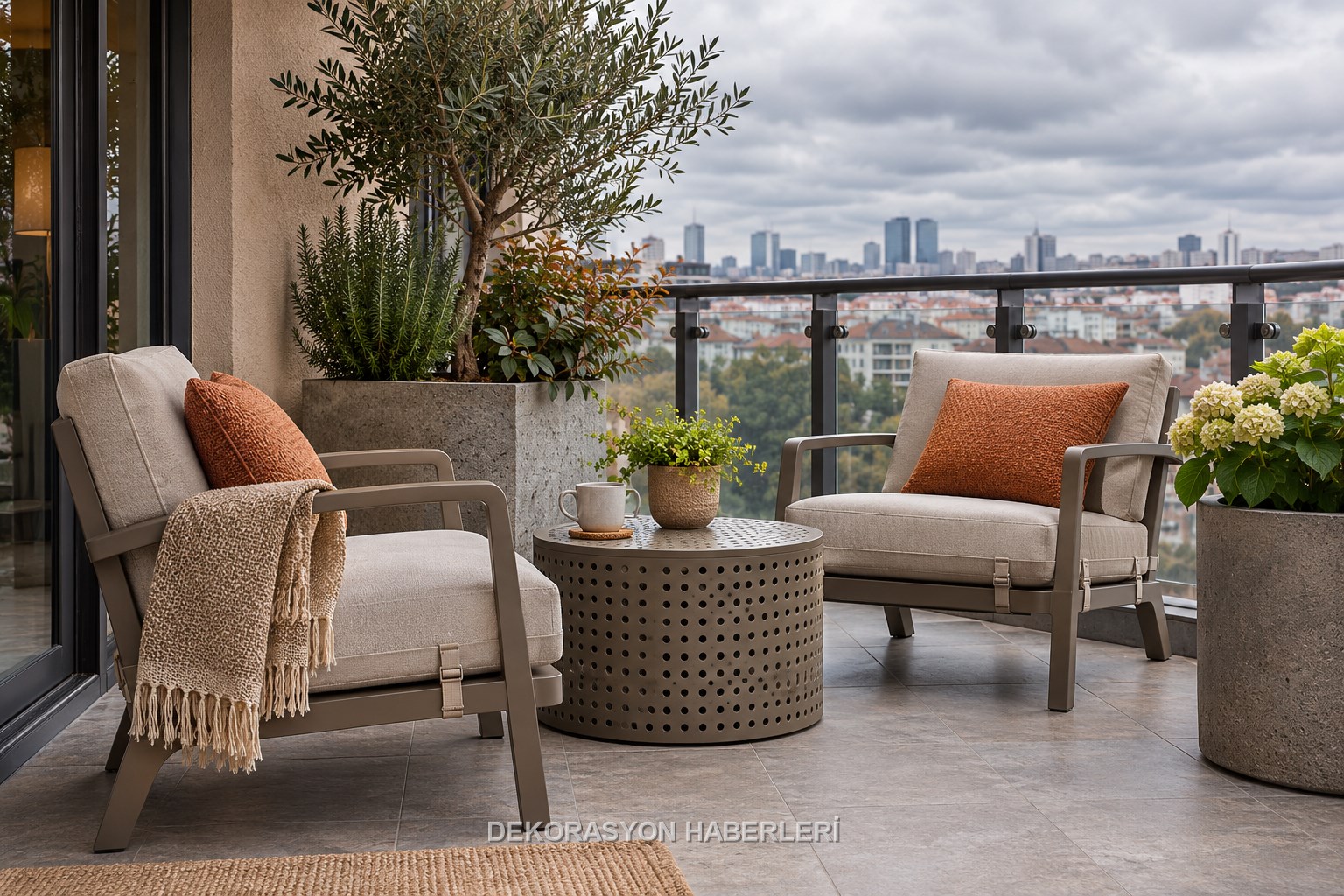
Low profile outdoor furniture, interlocking cushion tie, perforated surface, heavy base planter and limited textiles. Do not establish the relationship between the two based on color alone. Scratches, water marks, sun changes, edge wear and the possibility of repair determine the long-term outlook. Ask the seller for a technical sheet, maintenance instructions and, if possible, a used sample.
Move the sample closer to the surface on which it will be used; Store light is not enough to make a decision. Creating a wind-sun map of the balcony during the day and observing where the water flows. Storing the product code, serial information and application system makes it easier to achieve the same result when retouching is required in the future.
Divide the application into control stops
The suggested order is: watching the empty balcony on a windy day, moving the low seat into a sheltered corner, and giving each moving part a safe hiding spot. Recheck the size, surface and movement after each major step. If the next action will cover up the previous error, stop and correct the cause; Moving quickly only makes mistakes more expensive.
Use protective equipment according to product and tool instructions. Keep children and pets away from the work area. If there is a fixed electricity, water line, insulation or building connection, the application must be carried out by an experienced and competent person.
Make light a control tool, not a separate decoration
View the sample by the window, in the middle of the room, and in the actual spot where it will be used. Brightness magnifies the reflection, dark tone magnifies weight, and raised texture magnifies the shadow. Since the phone screen can correct the color automatically, do not make the final decision based on the photo.
In the evening, do not settle for general light, but also try the task and low level layers. The light source should not shine directly into the eye and should show the work being done without shadowing it. The correct protection class is required for fixed fixtures and wet areas; Electrical connection is the job of a competent electrician.
Invest in the right order rather than finishing all at once
Choosing two sturdy chairs and a safe small table instead of many pieces; keeping textiles retrievable when needed. Plan the budget not as a single shopping day, but as stages that do not disrupt each other. The first stage is security and main function, the second is the durable surface, and the third is the detail that completes the appearance.
Although sample and size proofing may seem like a small expense, it reduces the risk of wrong orders. Include delivery, assembly, wastage, dismantling and waste costs in the bids. Utilizing existing materials is not only an opportunity to save money, but also to create a unique character for the house.
Most common mistake: covering up the result without solving the cause
What should be avoided in this application is leaving curtains, umbrellas, light chairs and loose flower pots unattended, creating a risk for the facade and the area below. If the first sign recurs, find the underlying cause rather than just renewing the surface. Do not attempt in case of structural, electrical or water related doubt; Seek appropriate expert review.
For local adaptation, verifying apartment codes, façade safety and outdoor product class before application. Climate, building age, apartment rule and tenancy limit may change the solution. A flashy product without reliable supply, clear technical information and repair facilities is not a long-lasting choice.
Turn the usage note into a small maintenance file
During the storm warning at the beginning of maintenance, take all moving parts indoors and check connections and corrosion regularly. Collect photos, product code, application date and cleaning method in one note. Knowing which layer, connection or product is used prevents unnecessary disassembly when a problem arises.
Do not confuse a weekly quick cleaning with a monthly technical check. Monitor loosening, water marks, wear and deterioration separately. If there is a part that requires constant intervention, consider a simpler solution; Good design should work without imposing a new maintenance burden on the household.
WIND PLAN: decision summary before implementation
The brief working order of this file is as follows: First, observe the prevailing wind direction, turbulence behind the door, railing height and overturning marks of the goods; then watching the empty balcony on a windy day, moving the low seat into a sheltered corner and giving each moving part a safe storage spot. At the material stage, compare low-profile outdoor furniture, interlocking cushion ties, perforated surfaces, heavy-based flower pots and limited textile options under the same light and usage conditions. If the measurement, proof and sample are not consistent with each other, do not proceed to the order or permanent application stage.
The main risk that requires you to rethink the decision is leaving curtains, umbrellas, light chairs and loose flower pots unattended, creating a risk to the facade and the area below. Choosing two sturdy chairs and a safe small table instead of many pieces to save the budget; keeping textiles retrievable when necessary; After starting use, take all moving parts indoors in case of a storm and check connections and corrosion regularly. Thus, choosing furniture and textiles on a windy balcony is no longer an idea based solely on appearance, but turns into a home solution that can be measured and whose maintenance is planned.
Establishing a balanced balcony without putting light items at risk of flying and without straining the floor and evacuation with heavy furniture. We have collected measurement, material, application, safety and maintenance decisions in a single guide.
Decision table
Application checklist
- ✓WIND PLAN: a brief diagnosis before shopping
- ✓Calculate centimeters with usage margin
- ✓Choose the way the material ages, not its first day
- ✓Divide the application into control stops
- ✓Make light a control tool, not a separate decoration
Most common mistake
What should be avoided in this application is leaving curtains, umbrellas, light chairs and loose flower pots unattended, creating a risk for the facade and the area below. If the first sign recurs, find the underlying cause rather than just renewing the surface. Do not attempt in case of structural, electrical or water related doubt; Seek appropriate…
Care note
During the storm warning at the beginning of maintenance, take all moving parts indoors and check connections and corrosion regularly. Collect photos, product code, application date and cleaning method in one note. Knowing which layer, connection or product is used prevents unnecessary disassembly when a problem arises. Do not confuse a weekly quick…
Frequently asked questions
What should be decided first for Furniture and textiles for a windy balcony?+
Establishing a balanced balcony without putting light items at risk of flying and without straining the floor and evacuation with heavy furniture. Before looking for a solution, document the current situation with a sketch, four photos and three daily usage notes. Determining whether the problem arises from…
What should be checked before measuring and installation?+
The measurement to be applied under this heading is as follows: observing the prevailing wind direction, turbulence behind the door, railing height and overturning marks of the goods. Take the same value from three points if possible; In old buildings, walls and floors may not be exactly parallel. Do not forget to…
Which criteria matter when choosing materials?+
Low profile outdoor furniture, interlocking cushion tie, perforated surface, heavy base planter and limited textiles. Do not establish the relationship between the two based on color alone. Scratches, water marks, sun changes, edge wear and the possibility of repair determine the long-term outlook. Ask the seller for…
How should the maintenance plan be organised?+
During the storm warning at the beginning of maintenance, take all moving parts indoors and check connections and corrosion regularly. Collect photos, product code, application date and cleaning method in one note. Knowing which layer, connection or product is used prevents unnecessary disassembly when a problem…