This story turns a decorating idea into a practical approach for real homes instead of simply presenting a look.
Shadow planning starts with reading the facade
Summer comfort in Mediterranean homes is not solved by air conditioning capacity alone. The same window behaves differently in the morning on the east side and in the hottest hours of the day on the west side. Over the course of a week, note the time the sun first touches the glass, the point at which the glare begins, and when the room warms up. This simple observation shows which window needs external shade and which needs only a fine filter.
An adjustable layer is required for long-term light on the south side, and more intense protection is required for the harsh sun coming from a low angle in the west. Balcony projection, neighboring building and tree shadow are also included in the plan. Instead of making a decision based on the ready-made curtain size, a better start is to photograph the window with its surroundings and compare them at three hours of the day.
Exterior shade and interior curtain do not do the same job
More effective control is achieved when solar heat is cut off before it reaches the glass. Shutters, awnings or balcony curtains therefore work differently than the thick backdrop inside. The building's façade, wind load and management rules can limit external intervention; Permission and installation conditions should be checked before fixed application. A portable balcony curtain or improving the existing shutter in the rental house is a more reversible solution.
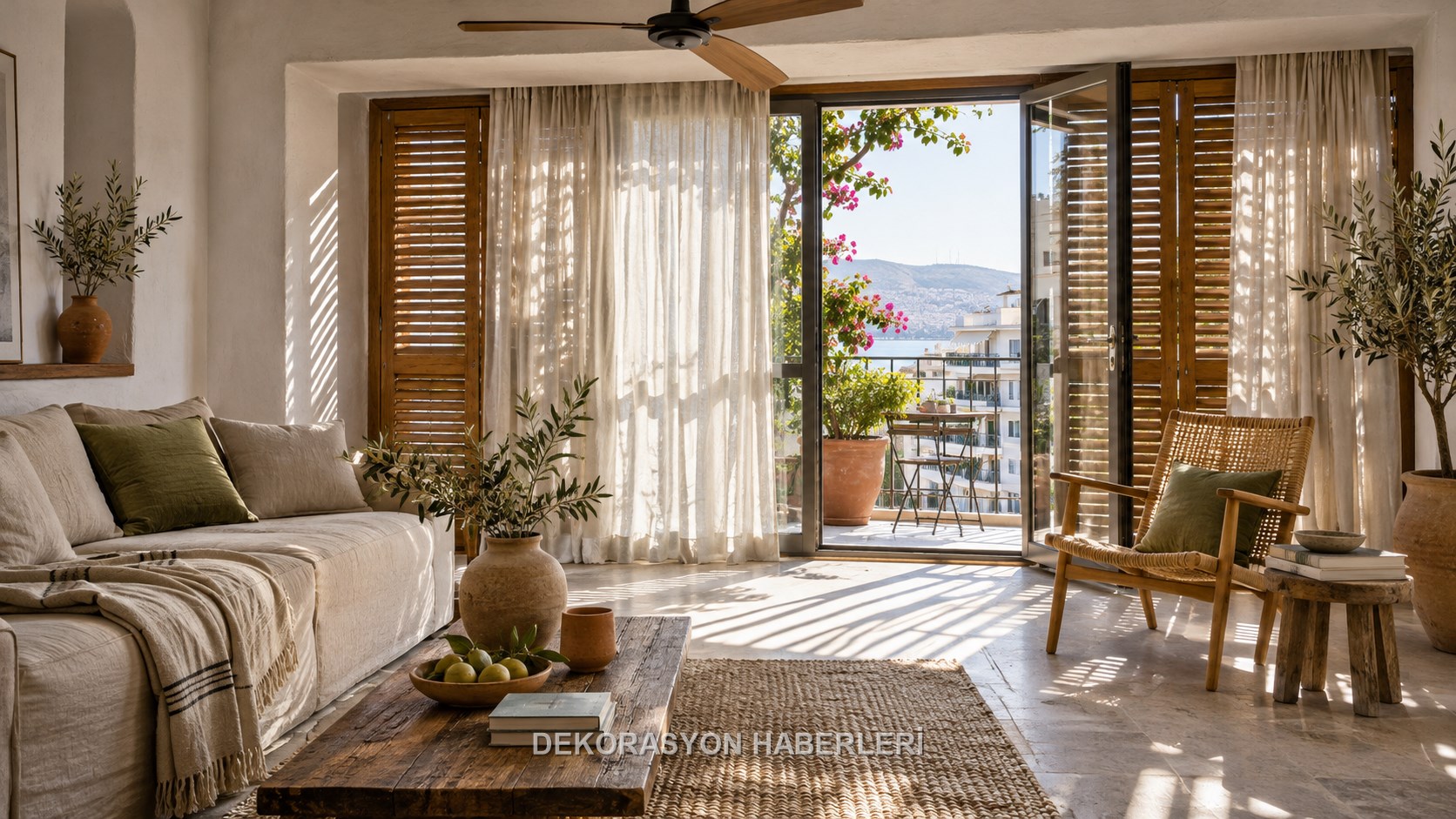
Inside, the thin tulle can take care of daytime privacy and glare, while the dense backdrop can take care of dusk and additional heat control. Moving two layers on separate tracks gives more precise tuning than a single heavy curtain. The rail distance must be measured to ensure that the layers do not rub against each other, do not block the window handle and balcony door, and do not cover the air conditioner outlet.
“Shadow is not the absence of light; It is the decision made where and how long you will stay during the day.”
Don't just look at color when choosing fabric
The linen look suits warm climate aesthetics; However, pure linen can wrinkle easily, fade in the sun and require maintenance. Blend fabrics may behave more evenly. Hang the sample on the window and see the light transmittance in the morning, noon and evening. Very thin fabric that appears white may shine in harsh sun; A medium intensity off-white or sand tone can create a softer filter.
Although the curtain looks romantic when it touches the floor, it can collect dust and moisture on the balcony door. It is more practical to leave a small amount of floor space in front of a frequently opened window. Washing instructions, shrinkage allowance, sun resistance and total weight after sewing should be asked before ordering. In large spans, the carrying capacity of the rail is as important as the fabric.
Do not block air movement with furniture
Mutually opening windows and doors create a natural air line. Placing the high cabinet in the middle of this line or sticking the curtain to the window slows down the cooling. Collect large furniture on blind walls; use lower pieces opposite the openings. Seats and baskets accumulated behind the door are unnoticeable but constantly working obstacles.
If a ceiling fan is to be used, its wingspan, ceiling height and manufacturer's safety distances should be checked. Do not place the table fan in the circulation line or in a wet area. Establishing a routine of cross ventilation when the outside air cools at night and keeping the shade closed during the day; It requires not only decoration but also usage habit.
Materials and surfaces that give a feeling of coolness
Matte lime tone, light wood, textured ceramics and loose natural textiles create a visually cool floor. But light color alone does not solve temperature. Reducing heat-retaining dark surfaces in front of sunny windows, removing thick carpets in summer and replacing the sofa cover with breathable fabric will make a more concrete difference.
Natural stone and ceramics may feel cool when standing bare; Maintenance and slip behavior should be evaluated according to the area of use. Textures such as wicker and reed require mold control in humid areas. Instead of choosing every ingredient with the "natural" label, consider it with the possibility of cleanliness, sun, salty air and renewal.
How should the lighting change at sunset?
The eye, which gets used to strong light during the day in a Mediterranean house, may get tired when a single bright ceiling lamp is visible in the evening. Using a floor lamp in the living area, a more focused pendant lamp in the dining area, and low-level light in the transition creates layers. Keeping the color temperature of the bulbs close to each other prevents walls and fabrics from turning different colors in the evening.
When the curtain is closed, a dark pit may form around the window as the outside light disappears. A sconce or indirect source that directs light onto the wall rather than directly onto the glass balances this gap. Appropriate protection class must be checked for outdoor luminaires, and cable and heat safety must be checked for indoor lighting according to the manufacturer's instructions.
Application order and budget control
Observe the sun route first, then look for the outer shade option, measure the inner shade in the third step. Then evaluate the furniture location and the fan. This sequence prevents you from missing out on the need to buy an expensive backdrop curtain and cut off the actual heat outside the window. Testing on a summer's day with small samples and workarounds is cheaper than a permanent order.
At the final check, check that the windows and doors are fully opened, the fabric does not block the air outlet, the rail carries the load and night privacy is sufficient. Good shade plan does not leave the house dark; It establishes a system that acts according to the time of day. Color and accessories come after this system works.
The curtain is not an accessory added later; Thinking of it as an architectural layer that manages heat, light and privacy.
Decision table
Application checklist
- ✓Shadow planning starts with reading the facade
- ✓Exterior shade and interior curtain do not do the same job
- ✓Don't just look at color when choosing fabric
- ✓Do not block air movement with furniture
- ✓Materials and surfaces that give a feeling of coolness
Most common mistake
The eye, which gets used to strong light during the day in a Mediterranean house, may get tired when a single bright ceiling lamp is visible in the evening. Using a floor lamp in the living area, a more focused pendant lamp in the dining area, and low-level light in the transition creates layers. Keeping the color temperature of the bulbs close to each…
Care note
Observe the sun route first, then look for the outer shade option, measure the inner shade in the third step. Then evaluate the furniture location and the fan. This sequence prevents you from missing out on the need to buy an expensive backdrop curtain and cut off the actual heat outside the window. Testing on a summer's day with small samples and…
Frequently asked questions
What should be decided first for In Mediterranean homes, shade is part of the plan?+
Summer comfort in Mediterranean homes is not solved by air conditioning capacity alone. The same window behaves differently in the morning on the east side and in the hottest hours of the day on the west side. Over the course of a week, note the time the sun first touches the glass, the point at which the glare…
What should be checked before measuring and installation?+
More effective control is achieved when solar heat is cut off before it reaches the glass. Shutters, awnings or balcony curtains therefore work differently than the thick backdrop inside. The building's façade, wind load and management rules can limit external intervention; Permission and installation conditions…
Which criteria matter when choosing materials?+
The linen look suits warm climate aesthetics; However, pure linen can wrinkle easily, fade in the sun and require maintenance. Blend fabrics may behave more evenly. Hang the sample on the window and see the light transmittance in the morning, noon and evening. Very thin fabric that appears white may shine in harsh…
How should the maintenance plan be organised?+
Observe the sun route first, then look for the outer shade option, measure the inner shade in the third step. Then evaluate the furniture location and the fan. This sequence prevents you from missing out on the need to buy an expensive backdrop curtain and cut off the actual heat outside the window. Testing on a…